SHARED HERITAGE · MEDICINE & SCIENCE
Polish-American History
Polish physicians and scientists have helped shape American medicine and global healthcare. This overview highlights a selection of their contributions across biomedical science, clinical medicine, public health, and education.
← Forum overviewIcons of Polish Medicine
Selected stories of Polish and Polish-American contributions to modern medicine and biomedical science.
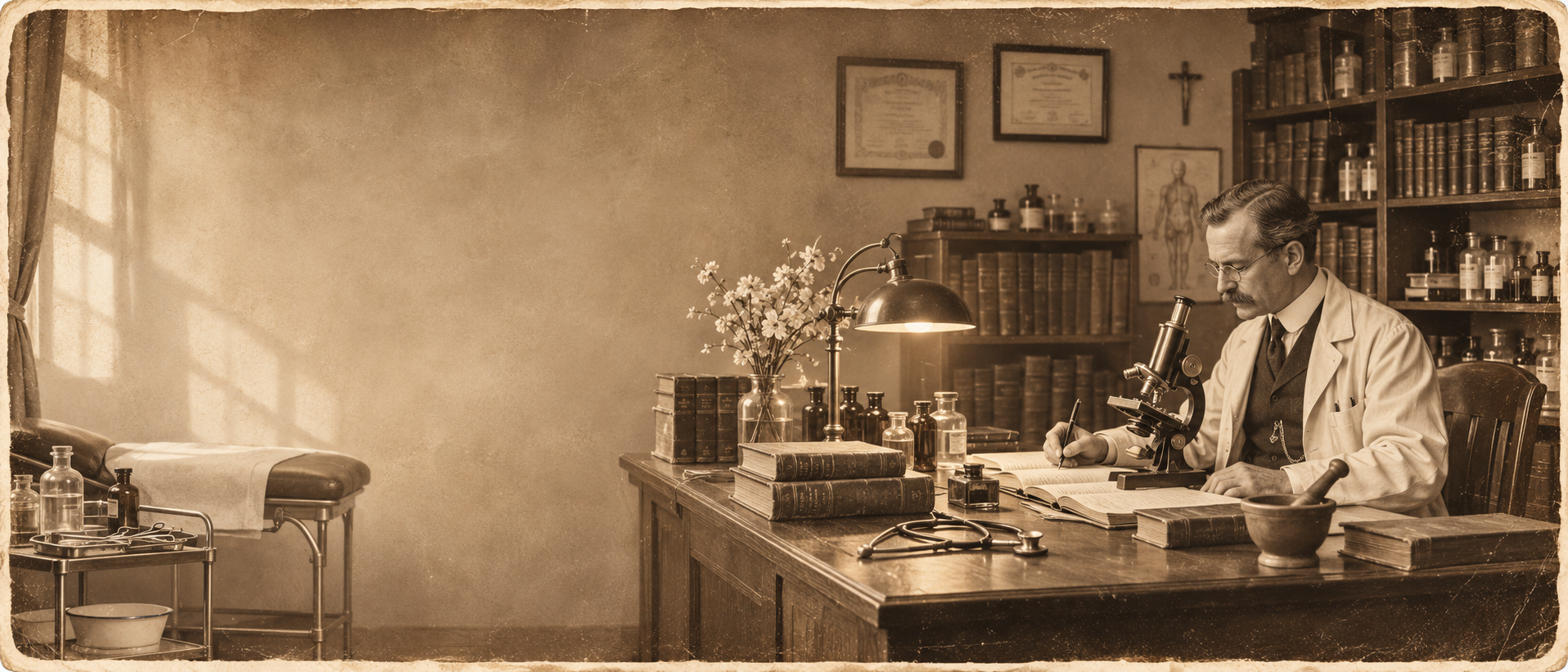
The supplied images are artistic illustrations, not archival photographs or verified portraits of the historical figures below.
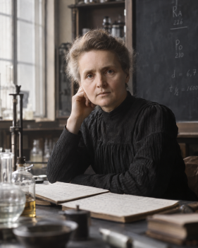
Marie Skłodowska Curie
Physics, Chemistry & Medicine
1867–1934
NobelPrize.org biography ↗Born in Warsaw, Curie’s research on radioactivity led to the discoveries of polonium and radium. Her work helped lay foundations for radiation research, nuclear medicine, and biomedical science.
Read more
Achievement
Born in Warsaw in 1867, Maria Skłodowska Curie became one of the most consequential scientists in modern history. Her work with Pierre Curie established radioactivity as a major field of inquiry and led to the discovery of polonium, named for Poland, and radium. She became the first woman to receive a Nobel Prize, the first person to receive two Nobel Prizes, and remains the only individual awarded Nobel Prizes in two different scientific disciplines: Physics and Chemistry. Her discoveries helped establish the foundations of radiation oncology, nuclear medicine, and modern biomedical research.
Global Impact
Curie’s Warsaw origins and discoveries of polonium and radium connect Polish scientific heritage with milestones in global physics and chemistry.
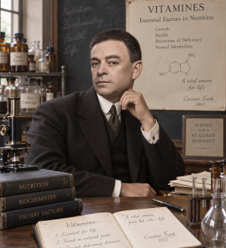
Casimir Funk
Biochemistry & Nutrition
1884–1967
Historical review in PubMed Central ↗Warsaw-born biochemist Kazimierz Funk introduced the term “vitamine” in 1912 while studying deficiency diseases. His work helped establish nutrition as a field of preventive medicine.
Read more
Achievement
Warsaw-born biochemist Kazimierz Funk, known internationally as Casimir Funk, helped create the modern science of nutrition. In 1912, while investigating deficiency diseases, he introduced the term “vitamine,” later shortened to “vitamin,” for essential dietary substances whose absence could cause illness. His work helped shift thinking about diseases such as beriberi, scurvy, and rickets toward the concept of nutritional deficiency. Funk later worked extensively in the United States, where he continued pharmaceutical and nutritional research and helped translate biochemical discoveries into practical approaches to disease prevention and health.
Global Impact
The everyday concept of vitamins, now central to preventive medicine and nutrition, emerged directly from the work of a Polish scientist.
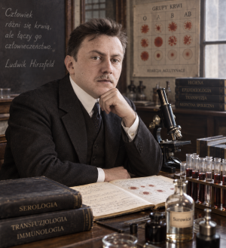
Ludwik Hirszfeld
Immunology, Blood Groups & Transfusion Medicine
1884–1954
Polish Academy of Sciences institute profile ↗Hirszfeld’s research helped establish modern serology and immunogenetics. He contributed to blood-group terminology and transfusion medicine, and organized medical teaching and public-health work during World War II.
Read more
Achievement
Ludwik Hirszfeld was a pioneering Polish physician-scientist whose work helped establish modern serology, transfusion medicine, and immunogenetics. With Emil von Dungern, he demonstrated that blood groups are inherited and helped standardize the ABO terminology still used today. Hirszfeld also studied population differences in blood-group frequencies and contributed to the development of transfusion services in Poland. During World War II, he organized clandestine medical teaching in the Warsaw Ghetto and participated in public-health efforts against infectious disease. His scientific legacy continues in transfusion medicine, obstetrics, and the study of immune compatibility.
Global Impact
Modern transfusion medicine, obstetrics, and immunohematology all reflect concepts advanced by Hirszfeld.
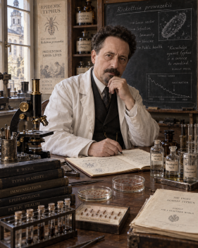
Rudolf Weigl
Microbiology & Vaccine Development
1883–1957
Lviv Center for Urban History ↗Weigl developed an early effective vaccine against epidemic typhus by cultivating the pathogen in lice. His research combined microbiology, infectious-disease control, and humanitarian public-health work.
Read more
Achievement
Rudolf Weigl was a Polish biologist and immunologist who developed one of the first effective vaccines against epidemic typhus, a disease that historically devastated armies and civilian populations. He devised a method for cultivating Rickettsia prowazekii in lice and used that system to produce vaccine at scale. His laboratory in Lwów became internationally known for vaccine research. During the German occupation, employment in the institute also provided protection for many Polish intellectuals and resistance members, while vaccine was clandestinely supplied to vulnerable populations. Weigl’s career combined scientific ingenuity, public-health impact, and moral courage.
Global Impact
Weigl’s work links Polish scientific innovation with infectious-disease control, public health, and humanitarian courage.
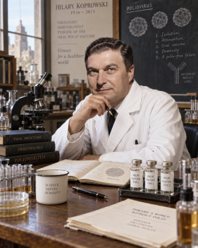
Hilary Koprowski
Virology & Polio Prevention
1915–2013
The Wistar Institute historical timeline ↗Polish physician and virologist Koprowski pioneered research into oral polio vaccination and later led Philadelphia’s Wistar Institute, contributing to virology, immunology, and vaccine research.
Read more
Achievement
Polish physician and virologist Hilary Koprowski became one of the pioneers of oral vaccination against poliomyelitis. In 1950, he conducted the first human administration of a successful live attenuated oral polio vaccine, demonstrating that oral immunization against polio was feasible years before it became central to global eradication programs. After establishing his career in the United States, Koprowski led Philadelphia’s Wistar Institute, helping build it into an important center for virology, immunology, vaccine development, and cancer research. His work also extended to rabies vaccines, monoclonal antibodies, and experimental approaches to infectious disease and oncology.
Global Impact
Koprowski shows how Polish medical expertise became embedded in an American research institution and produced global health impact.
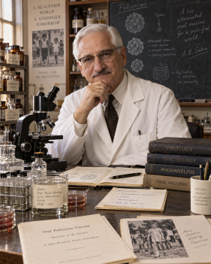
Albert Bruce Sabin
Virology & Global Polio Eradication
1906–1993
Sabin Vaccine Institute biography ↗Born in Białystok, Sabin’s research on poliovirus supported development of the live oral polio vaccine, which became a major tool in worldwide efforts to control poliomyelitis.
Read more
Achievement
Albert Bruce Sabin was born in Białystok in 1906 and immigrated to the United States as a teenager. His research demonstrated that poliovirus initially replicates in the intestinal tract, supporting development of a live oral vaccine capable of generating strong intestinal immunity. The Sabin oral polio vaccine became one of the principal tools used worldwide to control and nearly eradicate poliomyelitis. During World War II, Sabin served on the U.S. Army Epidemiological Board and investigated several infectious diseases affecting military personnel. His later career included research at the National Cancer Institute and continued advocacy for global vaccination.
Global Impact
Sabin became a central figure in one of the great achievements of twentieth-century public health: the global control of poliomyelitis.
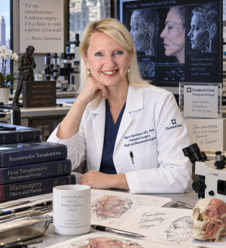
Maria Siemionow
Transplant Surgery & Reconstructive Medicine
b. 1957
University of Illinois College of Medicine profile ↗Trained at Poznań University of Medical Sciences, Siemionow became a leading transplant surgeon and scientist in the United States. At Cleveland Clinic she led the team behind the first near-total face transplant in the U.S. in 2008.
Read more
Achievement
Maria Siemionow, trained at Poznań University of Medical Sciences, became an internationally recognized transplant surgeon and scientist in the United States. At Cleveland Clinic, she led the team that performed the first near-total face transplant in the United States in December 2008. The 22-hour operation transplanted multiple tissue types, including skin, muscle, nerves, bone, and blood vessels, and represented a major advance in vascularized composite allotransplantation, microsurgery, immunology, and reconstructive medicine. Her later research has focused on nerve regeneration, immune tolerance, and cell-based approaches to complex diseases including Duchenne muscular dystrophy.
Global Impact
Siemionow directly connects Polish medical education with one of the most technically demanding innovations in modern American surgery.
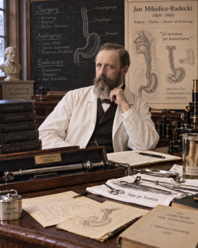
Jan Mikulicz-Radecki
Modern Surgery & Endoscopy
1850–1905
Historical review in PubMed Central ↗Mikulicz-Radecki advanced antisepsis, gastrointestinal surgery, endoscopy, surgical instruments, and operating-room organization, helping shape modern operative medicine.
Read more
Achievement
Jan Mikulicz-Radecki was one of the most innovative surgeons of the late nineteenth century and a major figure in the modernization of operative medicine. His work advanced antisepsis and asepsis, gastrointestinal surgery, endoscopy, surgical instrumentation, and operating-room organization. He designed early esophagoscopes and gastroscopes and was among the pioneers of endoscopic examination of the upper gastrointestinal tract. Mikulicz introduced and refined surgical techniques that improved the safety and effectiveness of abdominal operations, and his name remains associated with procedures and conditions such as the Heineke-Mikulicz pyloroplasty and Mikulicz disease.
Global Impact
Mikulicz helped transform surgery from a dangerous craft into a modern scientific and technically disciplined field.
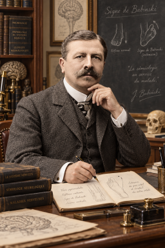
Józef Babiński
Neurology
1857–1932
French National Academy of Medicine biography ↗Born in Paris to Polish émigré parents, Babiński became a defining figure in clinical neurology. The Babinski sign remains a widely used element of neurological examination.
Read more
Achievement
Józef François Félix Babiński, born in Paris to Polish émigré parents, became one of the defining figures of modern clinical neurology. His name is permanently associated with the Babinski sign, the abnormal plantar response that indicates dysfunction of the corticospinal system. Introduced at the end of the nineteenth century, the sign remains one of the most widely taught and performed elements of the neurological examination. Babiński also contributed to the study of cerebellar disease, reflexes, hysteria, and neurological localization. His career illustrates the intellectual reach of the Polish diaspora and its contribution to European and global medicine.
Global Impact
A bedside sign discovered by a physician of Polish heritage remains fundamental to neurological examination around the world.
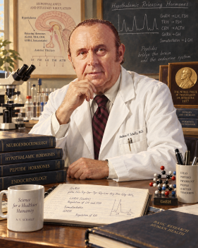
Andrew V. Schally
Neuroendocrinology
1926–2024
NobelPrize.org biography ↗Born Andrzej Schally in Wilno, Schally conducted much of his scientific career in the U.S. His research on hypothalamic hormones earned the 1977 Nobel Prize in Physiology or Medicine.
Read more
Achievement
Andrew Viktor Schally, born Andrzej Schally in prewar Wilno, became one of the world’s leading neuroendocrinologists and spent much of his scientific career in the United States. His research helped define how the hypothalamus regulates the pituitary gland through releasing hormones and transformed understanding of endocrine physiology. Schally received the 1977 Nobel Prize in Physiology or Medicine for discoveries concerning peptide hormone production in the brain. His later research contributed to therapeutic strategies for hormone-dependent cancers. A major portion of his career was associated with the U.S. Department of Veterans Affairs research system.
Global Impact
Schally is a major example of Polish-born scientific talent contributing directly to American federal biomedical research and Nobel-level discovery.
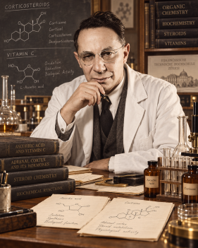
Tadeusz Reichstein
Chemistry, Vitamin C & Corticosteroids
1897–1996
NobelPrize.org biography ↗Polish-born chemist Reichstein developed an efficient method for synthesizing vitamin C and conducted influential research on adrenal-cortex hormones. He shared the 1950 Nobel Prize in Physiology or Medicine.
Read more
Achievement
Tadeusz Reichstein was a Polish-born chemist whose work transformed both industrial chemistry and clinical medicine. He developed an efficient method for synthesizing vitamin C and conducted fundamental research on hormones produced by the adrenal cortex. In 1950, he shared the Nobel Prize in Physiology or Medicine with Edward Kendall and Philip Hench for discoveries concerning adrenal cortical hormones, their structures, and biological effects. Those discoveries helped create the scientific basis for corticosteroid therapy, which became indispensable in the treatment of inflammatory, autoimmune, allergic, and transplant-related conditions. Reichstein’s work bridged chemistry, pharmacology, and medicine.
Global Impact
His research helped establish the therapeutic foundation for corticosteroids, medicines used across nearly every major clinical specialty.
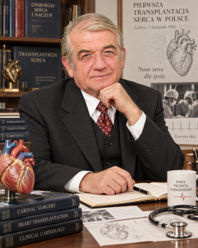
Zbigniew Religa
Cardiac Surgery & Transplantation
1938–2009
Medical University of Silesia profile ↗Religa helped pioneer heart transplantation and build advanced cardiac-surgery programs in Poland.
Read more
Achievement
Professor Zbigniew Religa became one of the most recognizable figures in modern Polish cardiac surgery. In 1985, Religa and his team performed Poland’s first successful heart transplant in Zabrze, helping establish cardiac transplantation as a viable clinical program in the country. He went on to build and lead cardiac-surgery and transplant institutions, train generations of surgeons, and advance public awareness of transplantation and cardiovascular medicine. Religa later served in national public life, including as Poland’s Minister of Health, while remaining closely associated with the growth of high-complexity cardiac care in Poland.
Global Impact
Religa symbolizes Poland’s transition into a sophisticated center for high-complexity cardiac surgery, transplantation, and clinical innovation.
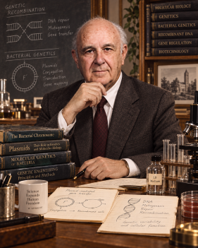
Wacław Szybalski
Molecular Biology & Genetics
1921–2020
University of Wisconsin–Madison source ↗Szybalski’s work linked genetics, biotechnology, and sustained Polish-American scientific exchange.
Read more
Achievement
Wacław Szybalski was a Polish-born molecular biologist who built much of his scientific career at the University of Wisconsin-Madison. His research contributed to molecular genetics, gene regulation, DNA manipulation, antibiotic resistance, and the experimental methods that helped define modern molecular biology. Szybalski’s laboratory explored mechanisms of gene expression and developed techniques that anticipated later advances in genetic engineering and synthetic biology. He also played an important role in international scientific exchange and maintained strong connections with Polish science throughout his American career, making him a particularly clear example of sustained Polish-American scientific collaboration.
Global Impact
Szybalski forms an intellectual bridge between classical genetics and today’s biotechnology, genomic medicine, and synthetic biology.